
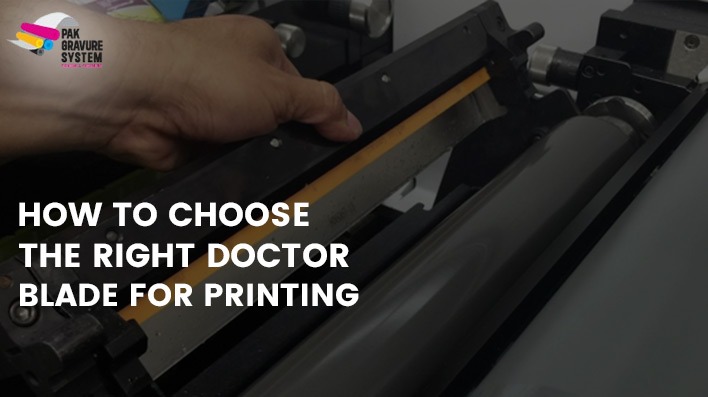
If you’re in the printing business, you already know how important the little details are. One of those key details is the doctor blade. A small but powerful tool that controls how much ink hits your printing surface. But with so many options out there, it’s easy to feel confused about how to choose the right doctor blade for printing.
Don’t worry—this guide will break it down for you in a clear, practical way.
Why Choosing the Right Doctor Blade for Printing Actually Matters
A doctor blade’s main job is to meter the ink—that means it wipes off the extra ink from the printing cylinder, so only what’s needed goes on the material. If you pick the wrong blade, you could end up with:
- Smudged or streaky prints
- Too much ink or uneven layers
- Blade wear that damages your press
- Slower runs and more downtime
That’s why knowing how to choose the right doctor blade for printing is more than just a technical task; it directly affects your quality, speed, and even profit.
What to Look for When Choosing the Right Doctor Blade for Printing
Blade Material
Different materials suit different jobs. Here’s a quick overview:
- Carbon steel – Strong and cost-effective. Good for short to mid runs.
- Stainless steel – Best for water or solvent-based inks. Doesn’t rust.
- Plastic blades – Soft used on delicate substrates.
- Coated blades – Great for long runs and high-speed jobs. Less friction and longer life.
Match the blade to your ink and the type of press you’re using.
Blade Thickness & Tip Design
- Thin blades are flexible and good for fine details but wear out faster.
- Thicker blades last longer but can be less precise.
As for the tip design:
- The lamella tip is best for precise ink metering.
- Beveled edge is strong and durable.
- Round tip is gentle but not very accurate.
Choosing the right shape and thickness depends on your print quality needs.
Ink Type Matters Too
Inks aren’t all the same—and your blade needs to match the chemistry.
- Solvent-based inks? Use stainless steel or coated blades.
- Water-based inks? Avoid carbon steel; it may rust.
- UV inks? Use coated blades to reduce wear and friction.
Getting this match wrong can quickly wear out your blades or, worse, mess up your prints.
How to Choose the Right Doctor Blade for Printing—Based on Your Press Type
Different presses need different blades. Here’s a quick breakdown:
For Flexographic Presses:
- Use thin, stainless steel blades with a lamella tip for better ink metering.
- For long jobs, coated blades reduce heat and extend life.
- Works well with chambered doctor blade systems.
For Rotogravure Presses:
- Go for medium-thick, beveled-edge carbon or coated blades.
- Gravure needs very clean wiping to keep the image sharp.
- Be careful with blade pressure to avoid damaging the cylinder.
Understanding your press type helps you make the right call, and that’s the heart of how to choose the right doctor blade for printing.
Keep Your Blade and Print in Top Shape
Once you’ve picked the right blade, take care of it:
- Don’t apply too much pressure.
- Clean your blade holders regularly.
- Watch for wear and replace blades before print quality drops.
- Store your blades in a clean, dry place.
- Train your press operators on blade handling—it makes a big difference.
- Proper maintenance gives you better results and longer blade life.
Common Mistakes You Should Avoid
Let’s be real—everyone makes mistakes. Here are a few you can easily avoid:
- Using one blade for every job—printing isn’t one-size-fits-all.
- Skipping the match between ink and blade.
- Choosing based on price only. A cheap blade that ruins a job is expensive.
- Forgetting to test before full production.
- Ignoring training the operator’s skill matters too.
Remember, it’s not just a blade—it’s a tool that directly affects your final product.
Quick Reference Chart
Feature
Best Use
Blade Type
High Detail Print
Flexo
Lamella Tip, Thin SS
Long Run Jobs
High-Speed Gravure
Coated Beveled
Soft Substrates
Low-pressure jobs
Plastic, Round Tip
Water-Based Inks
Clean jobs
Stainless Steel
UV/Heat Sensitive
Fast-drying ink
Coated Blades
Final Thoughts
Choosing the right doctor blade might feel technical, but it’s actually quite practical. By understanding your press, ink, and production needs, you can figure out how to choose the right doctor blade for printing and get better results with less hassle.
It’s all about getting clean, consistent prints with less downtime and fewer headaches.