
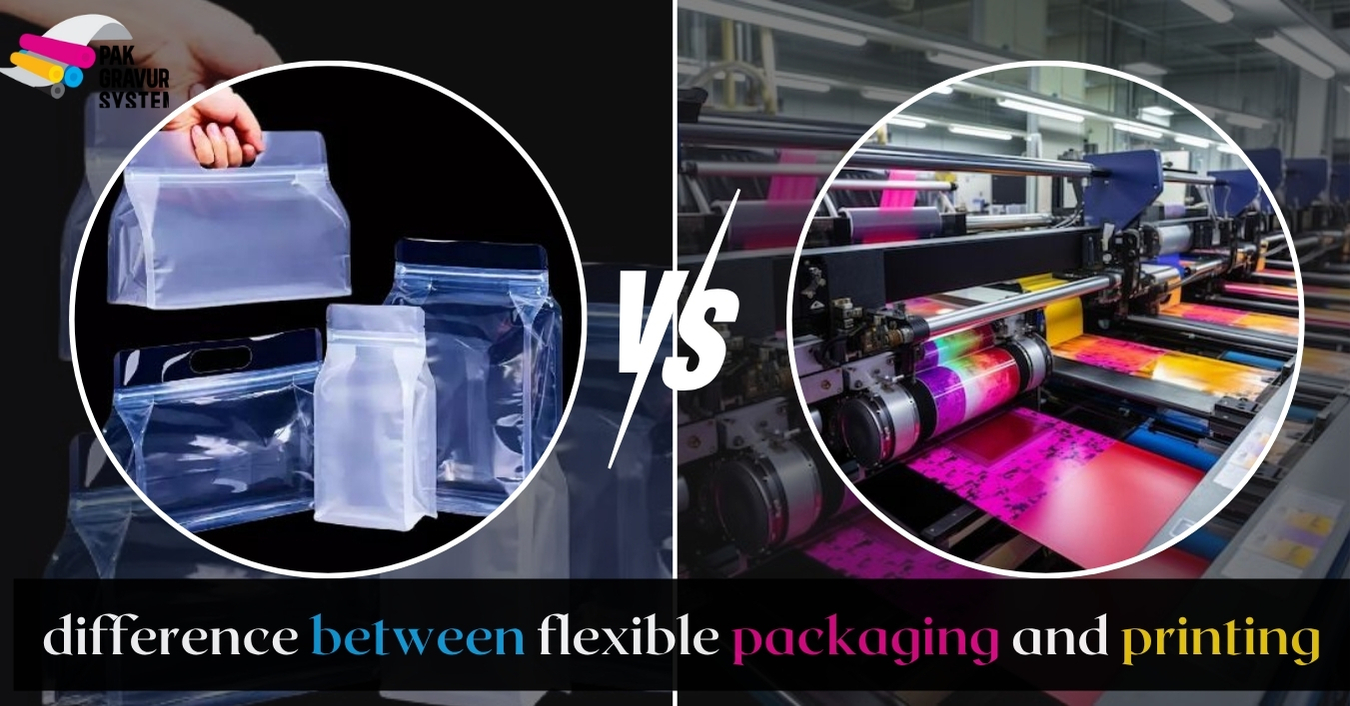
Look, I get it. When you’re trying to launch a product or upgrade your packaging, everyone starts throwing around terms like “flexible packaging” and “printing” like they’re the same thing. But they’re not, and mixing them up can cost you money.
So let me break this down in plain English.
What is the difference between flexible packaging and printing? Simple. Flexible packaging is the bag, pouch, or wrapper itself, the thing that actually holds your product. Printing is what puts your logo, colors, and all that branding stuff on it.
Think of it like this: the packaging is your phone. The printing is the case and screen protector that makes it look cool. Both matter, but they’re completely different things.
I’m gonna walk you through everything you need to know about both, what they are, how they work, and why getting them right can make or break your product on the shelf.
What Even Is Flexible Packaging?
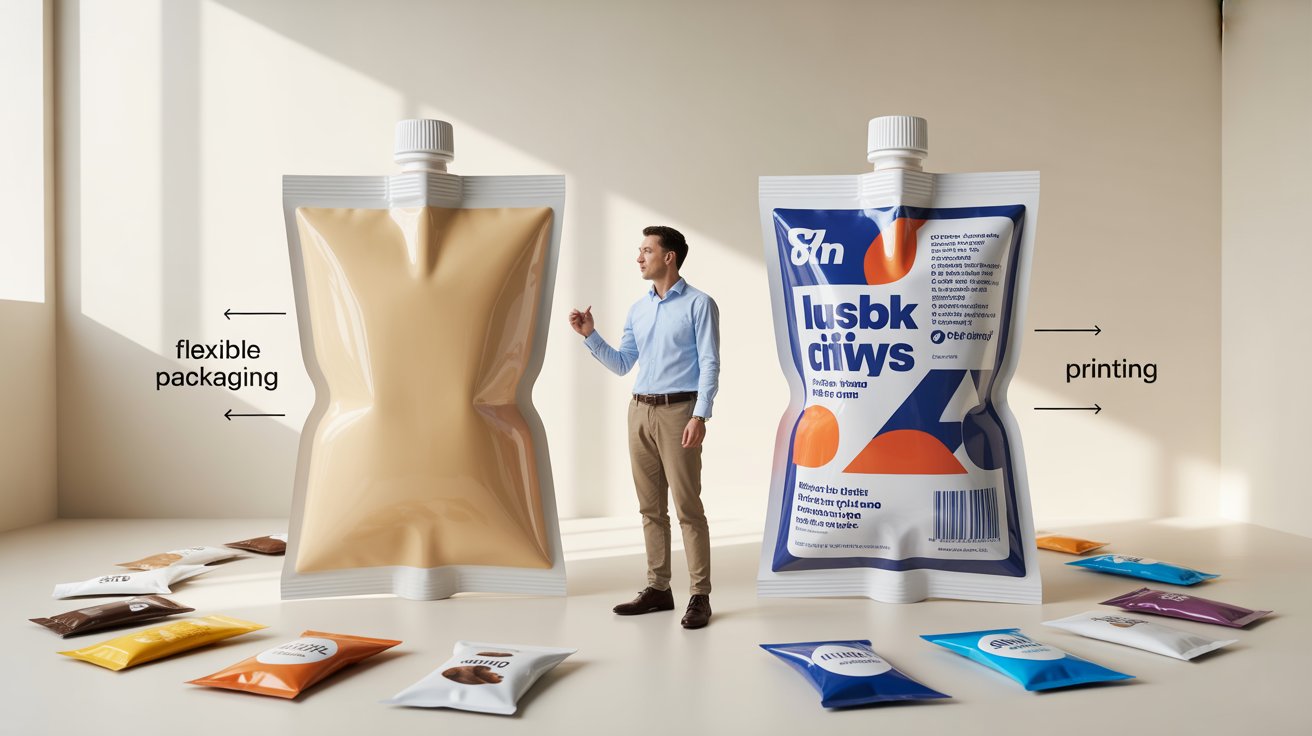
Flexible packaging is just packaging that bends. That’s it. It’s not stiff like a glass jar or a tin can. It’s soft, it folds, it’s easy to carry around.
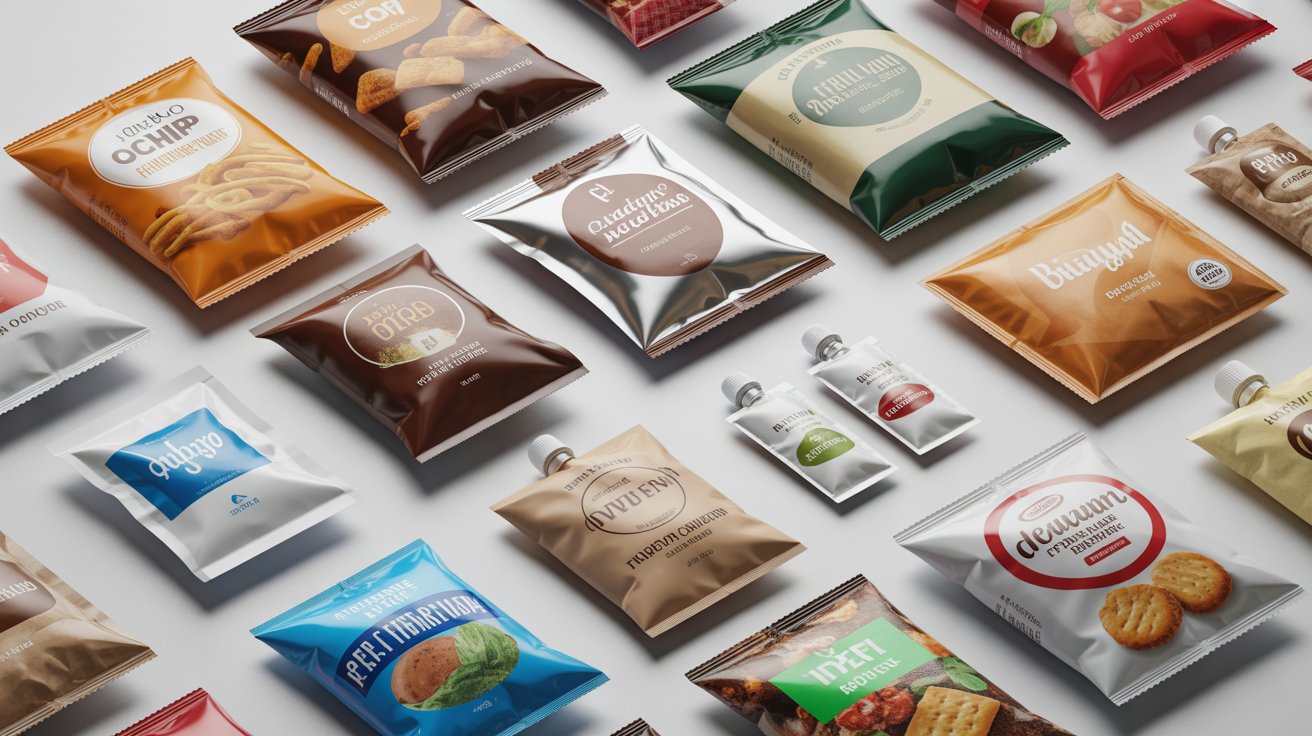
You see it literally everywhere:
- Chip bags (you know, the ones that make all the noise)
- Coffee pouches with those zip seals
- Shampoo sachets
- Frozen veggie bags
- Biscuit wrappers
All that stuff? Flexible packaging.
Most of it’s made from plastic films, things like BOPP, PET, PE. Sometimes companies layer a bunch of different films together (that’s called a laminate) to make it stronger and keep your product fresher for longer.
Why’s Everyone Using It?
There’s a few reasons flexible packaging has taken over:
It’s way cheaper. Less material means you’re spending less on production and shipping. That adds up fast when you’re doing thousands of units.
It actually protects stuff. Those multi-layer films? They keep moisture, oxygen, and light out. Your chips stay crispy. Your coffee stays fresh.
You can make it however you want. Stand-up pouches, flat sachets, bags with zippers—whatever works for your product.
It looks good. Especially when you pair it with decent printing. We’ll get to that.
Shipping’s easier. It weighs less than rigid packaging, so you save a ton on freight.
Honestly, for most food and personal care products, flexible packaging just makes sense. It’s practical.
What’s Printing Got to Do With This?
Printing’s how you make that plain film look like your brand.
Without printing, you’ve just got a blank pouch. Could be anyone’s product. With printing, you’ve got something people recognize and actually want to buy.
Here’s what goes on the packaging through printing:
- Your logo
- Brand colors
- Product name
- Ingredients and nutritional info
- Expiry dates
- Barcodes
- Any certifications (halal, organic, whatever)
- Photos or graphics
Basically everything you see when you look at a package, that’s printing.
And here’s the thing nobody tells you: the quality of your printing matters way more than you think.
If your colors look washed out, your text is fuzzy, or the whole thing just looks cheap, people assume your product’s cheap too. I’ve seen great products fail because the packaging looked sketchy. Don’t let that happen to you.
The Actual Difference (In Plain Terms)
Let me just lay it out:
| Flexible Packaging | Printing |
| The actual pouch/bag/wrapper | The design on that pouch |
| Made from plastic films or laminates | Done with machines that put ink on the film |
| Keeps your product safe and fresh | Makes your product look branded |
| About structure and protection | About appearance and communication |
Or to put it another way:
- Flexible packaging = “What’s holding my product?”
- Printing = “What does it look like?”
You can’t really have one without the other. Well, you can, but nobody’s buying an unbranded pouch.
Different Ways to Print on Packaging
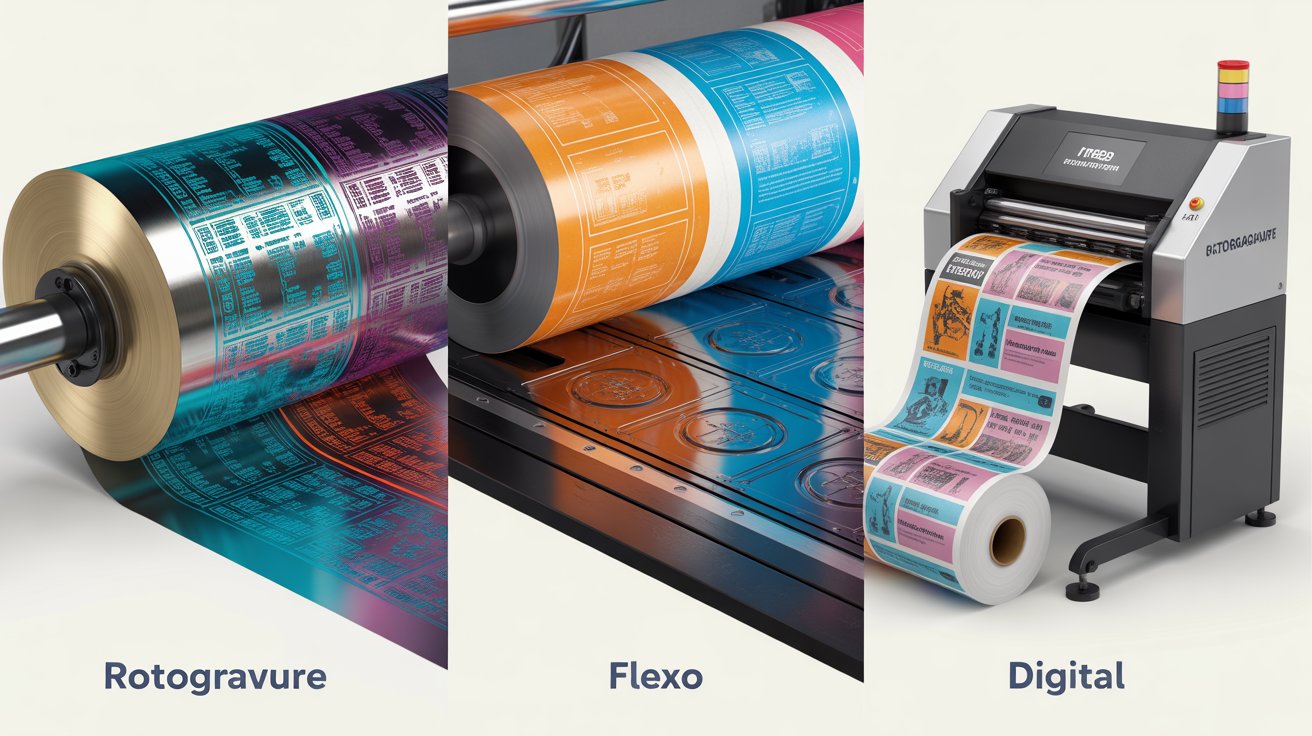
Not all printing’s the same. Depends on what you’re making and how many you need. Here’s the main types:
1. Rotogravure Printing
This is the heavyweight. Rotogravure (people just call it gravure) is what big brands use for chips, snacks, biscuits, stuff like that.
How it works: your design gets carved into metal cylinders. Those cylinders roll through ink and stamp it onto the film. Sounds old school, but it works incredibly well.
When you’d use it: If you’re printing thousands or millions of pouches and want really sharp, vibrant colors.
Good stuff: Print quality’s amazing. Colors stay consistent. Great for detailed images.
Downside: The cylinders aren’t cheap to make. So if you’re only doing a small batch, it’s probably not worth it.
2. Flexographic Printing
Flexo’s more flexible (see what I did there?). Uses rubber or polymer plates instead of engraved cylinders. Setup’s faster and cheaper.
When you’d use it: Medium to large runs where you want good quality without gravure’s setup cost.
Good stuff: Faster to set up. Still looks professional. Works for lots of different products.
Downside: Not quite as sharp as gravure, especially for super detailed stuff.
3. Digital Printing
Digital’s the new kid. No plates, no cylinders. You just send the file and it prints straight onto the film.
When you’d use it: Small batches, test runs, seasonal designs, anything where you might change the design often.
Good stuff: Super quick. No setup cost. Perfect if you need customization or variable data.
Downside: If you’re doing big volumes, it gets expensive per unit.
So yeah, pick based on your volume and budget. Most serious brands go with gravure or flexo.
What “Flexible Packaging” Actually Means
Flexible packaging just means packaging made from materials that bend easily. It’s the opposite of rigid stuff like bottles and jars that hold their shape no matter what.
Common materials include:
BOPP (Biaxially Oriented Polypropylene) – That clear, crinkly film. Prints really nicely. Common for snack bags.
PET (Polyester) – Strong, doesn’t melt easily. Usually the outer layer on fancier packaging.
PE (Polyethylene) – Soft and flexible. This is usually what seals the inside of your pouch.
CPP (Cast Polypropylene) – Good for lamination and heat sealing.
Aluminum Foil – Blocks out light and oxygen completely. Coffee brands love this stuff.
Most packaging isn’t just one layer though. It’s multiple films stuck together. Each layer does something different:
- One layer looks good and prints well
- One layer blocks moisture and oxygen
- One layer seals the pouch shut
That’s how you get packaging that looks good AND keeps your product fresh.
The 4 Types of Packaging (Quick Overview)
1. Primary Packaging
Touches your product directly. Chip bag, shampoo sachet, chocolate wrapper. This is where flexible packaging lives.
2. Secondary Packaging
Groups multiple products. Like a cardboard box holding several pouches.
3. Tertiary Packaging
For shipping. Pallets, stretch wrap, stuff like that.
4. Ancillary Packaging
Extra bits like labels and instruction sheets.
Flexible packaging dominates primary packaging because it’s cheap and works great for most products.
What’s “Flex” Mean in Printing?
Quick note: when people say “flex printing,” they usually mean flexographic printing, the method I mentioned earlier.
But sometimes people just use “flex” to mean flexible packaging in general.
It’s confusing. Just know that in the printing world, flex usually refers to the flexo process specifically.
The Two Big Printing Methods
If we’re keeping it simple, there’s really two main players:
1. Rotogravure (Gravure)
High volume. High quality. What big brands use.
2. Flexographic (Flexo)
Versatile. Fast. Works for most stuff.
Digital’s growing but still mostly for special cases.
What’s This GSM Thing?
GSM stands for Grams per Square Meter. It’s basically how thick the film is.
Higher GSM = thicker, tougher material
Lower GSM = thinner, lighter, cheaper
Like:
- A thin sachet might be 40-60 GSM
- A regular stand-up pouch could be 80-120 GSM
- Heavy-duty bags might be 150+ GSM
Why care about GSM?
- Thicker films protect better but cost more
- Thinner films save money but might tear
- Different printing methods work better on certain thicknesses
How This Stuff Actually Gets Made
Here’s the quick version of how flexible packaging goes from an idea to a finished pouch:
Step 1: Figure Out What You Need
What are you packing? Food? Cosmetics? Does it need to last 6 months or 6 days? Glossy or matte?
Step 2: Pick Your Materials
Based on what you’re packing, you choose the right films. Coffee needs different protection than frozen peas.
Step 3: Design It
Work with a designer to create your look. Logo, colors, layout, all that.
Step 4: Make Plates or Cylinders
For gravure, that means engraving cylinders. For flexo, making plates.
Step 5: Print It
Your design gets printed onto rolls of film using whatever method you picked.
Step 6: Laminate (If You Need To)
If you’re using multiple layers, they get stuck together with adhesive.
Step 7: Cut It
The big roll gets cut to the right width for your pouches.
Step 8: Make the Pouches
Film gets shaped, sealed, and cut into the final pouch. Zippers and stuff get added here.
Step 9: Check and Ship
Everything gets inspected and sent out.
Sounds straightforward, but there’s a lot of skill involved at every step.
How Packaging and Printing Affect Each Other
Here’s something important: these two things aren’t separate. They affect each other.
The material you pick changes how the printing looks. Glossy film gives you bright, punchy colors. Matte film gives you a softer, more natural vibe.
And the printing method you use affects what materials work best. Some films print better with gravure. Others are fine with flexo.
When you get both right, your product looks incredible. When you don’t… well, it doesn’t.
That’s why working with someone who understands both sides helps a lot.
Why You Shouldn’t Cheap Out on Printing
Real talk: your packaging’s probably the first thing customers see. Maybe the ONLY thing if they’re just browsing shelves.
If it looks cheap, people won’t trust it. They’ll think:
- “Is this even legit?”
- “Looks like a knockoff”
- “Not risking my money on this”
But if your printing’s sharp and professional, people think:
- “This brand’s got their act together”
- “Looks high quality”
- “I trust this”
Good printing does a few critical things:
Gets attention – Bright, clear designs pop on crowded shelves.
Builds trust – Clear labels and proper info make people feel safe buying.
Strengthens your brand – Consistent design makes you recognizable.
Lets you charge more – Premium printing means you can justify higher prices.
Seriously, don’t skimp on printing. It’s one of the best investments you’ll make.
Flexible vs Rigid Packaging (Quick Comparison)
Rigid Packaging
Glass bottles, metal cans, hard plastic containers. Doesn’t bend.
Pros: Super protective. Feels premium for some products.
Cons: Heavy. Expensive. Takes up tons of space.
Flexible Packaging
Pouches, bags, wrappers. Bends and folds.
Pros: Cheap. Light. Customizable. Looks great with good printing.
Cons: Can feel less premium if printing’s not on point.
For most consumer stuff, flexible wins. It’s practical and with the right printing, looks just as good as anything rigid.
How to Pick the Right Packaging Partner
So you get the difference now. Next step: finding someone who can actually deliver both well.
Look for these things:
Do they know materials? Can they explain why one film’s better than another for your product?
What printing options do they have? Gravure? Flexo? Digital?
Can they handle your order size? Some places only do huge runs. Others work with smaller batches.
How’s their quality control? Ask about testing and how they keep things consistent.
Can they customize? Zippers, spouts, tear notches, custom shapes?
Will they actually help you? Especially if this is your first time doing packaging.
Best case scenario: find someone who gets both the technical stuff (materials, barriers, GSM) and the creative stuff (design, color, print quality). That’s gold.
Bottom Line
So to wrap this up: what is the difference between flexible packaging and printing?
Flexible packaging’s the material, the actual pouch or bag that holds your product.
Printing’s what makes it look like YOUR product.
You need both. Great packaging without printing’s just a blank pouch. Great printing on weak packaging won’t keep your product fresh.
When you nail both, you get:
- Packaging that looks great on shelves
- Protection that keeps things fresh
- A brand people recognize
- Better sales
Your packaging isn’t just a container. It’s your first impression. It’s how people decide whether to pick up your product or walk past it.
Don’t settle for okay. Get packaging and printing that actually work.
Ready to Get Your Packaging Right?
At PakGravure, we do both flexible packaging and printing. Whether you’re launching something new or upgrading what you’ve got, we’ll help you figure out the best materials, printing methods, and formats.
We’ve worked with all kinds of brands, food, cosmetics, pharma, you name it. From picking materials to final production, we handle it.
Want to talk about your project? Need samples? Want a quote?
📧 Get in touch with PakGravure | 🌐 Visit our website to see what we can do for you.