
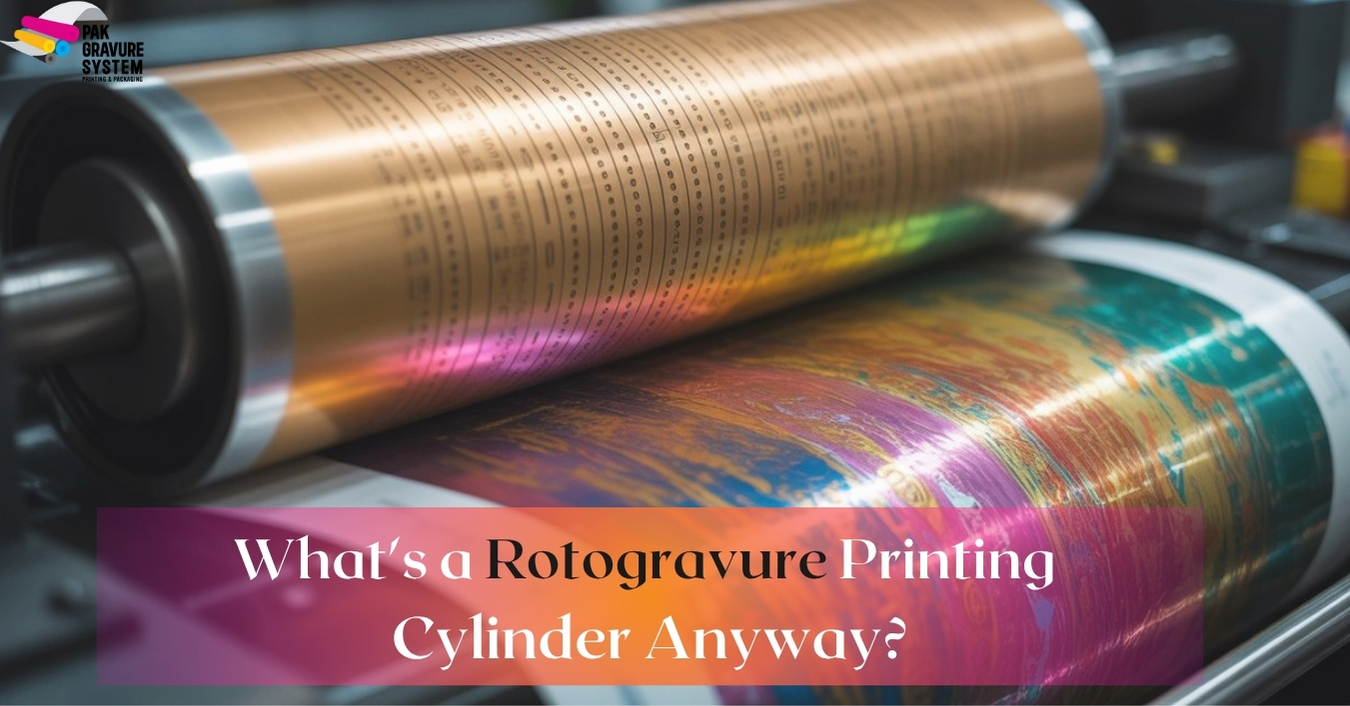
Ever grabbed a magazine off the shelf and thought “wow, these pictures are insanely clear”? Or noticed your favorite snack wrapper always looks perfect? There’s a decent chance rotogravure printing made that happen.
Here’s how it works. You’ve got this massive metal cylinder covered in thousands of microscopic pits. Each pit holds a tiny bit of ink. Roll it across paper or plastic and boom – there’s your image. The crazy part? Print number one looks exactly like print number five million. No joke.
That consistency is why companies love this method for huge production runs. Candy wrappers, magazine spreads, wallpaper – anything where you need a gazillion identical copies.
What’s This Thing Actually Made Of?
Start with a steel core. Steel handles all that spinning and pressure without warping. Then they coat it with copper because copper’s soft enough to carve intricate patterns into. After all the carving’s done, they add chrome on top. Chrome’s tough as hell, protects everything, and keeps the cylinder working way longer.
Carving Those Microscopic Pits
Three ways to do this:
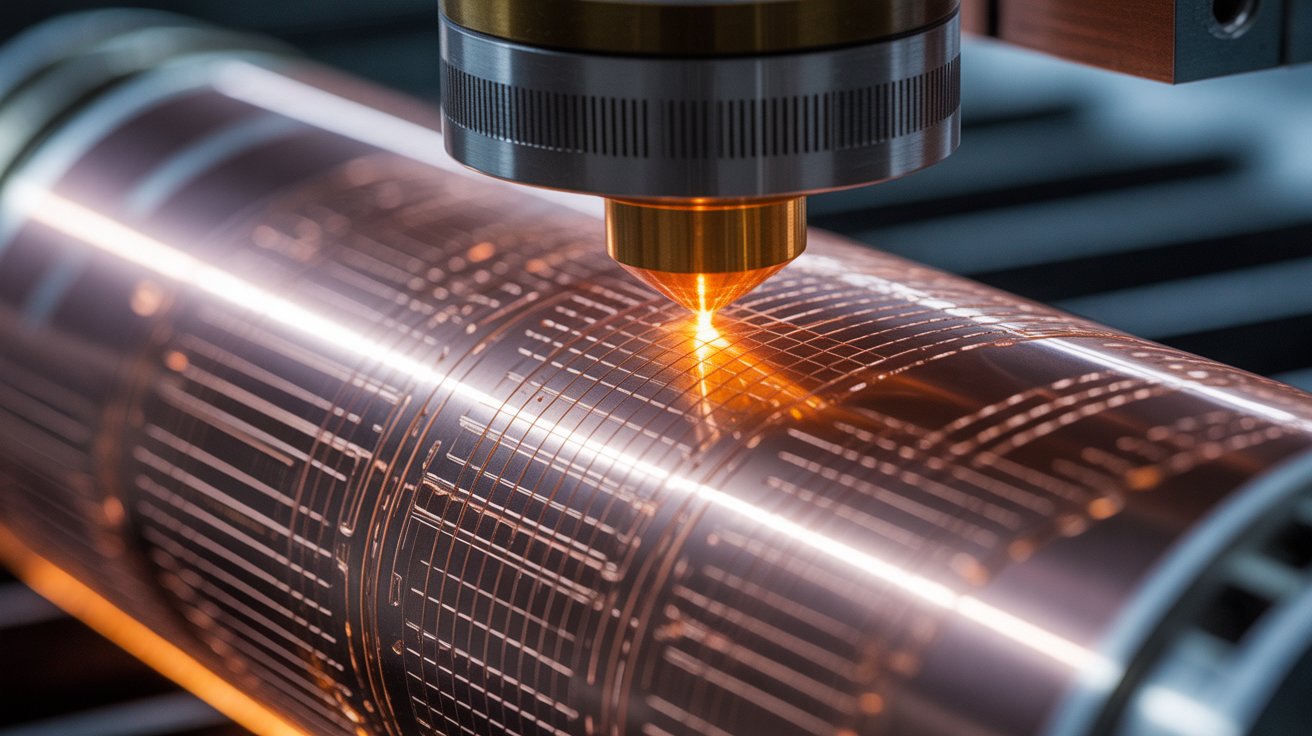
Diamond stylus – A super sharp diamond tip literally digs into the copper. Fast, accurate, handles most regular jobs without issue. Nothing fancy but it works.
Laser burning – Now we’re talking high-tech. A laser vaporizes material with insane precision. You’d use this for luxury packaging or designs with tons of detail where every little thing matters.
Acid etching – The old-school method. Protect certain spots, dunk it in acid, let chemistry work its magic. Not super common anymore but still gets used for specialized stuff like security printing.
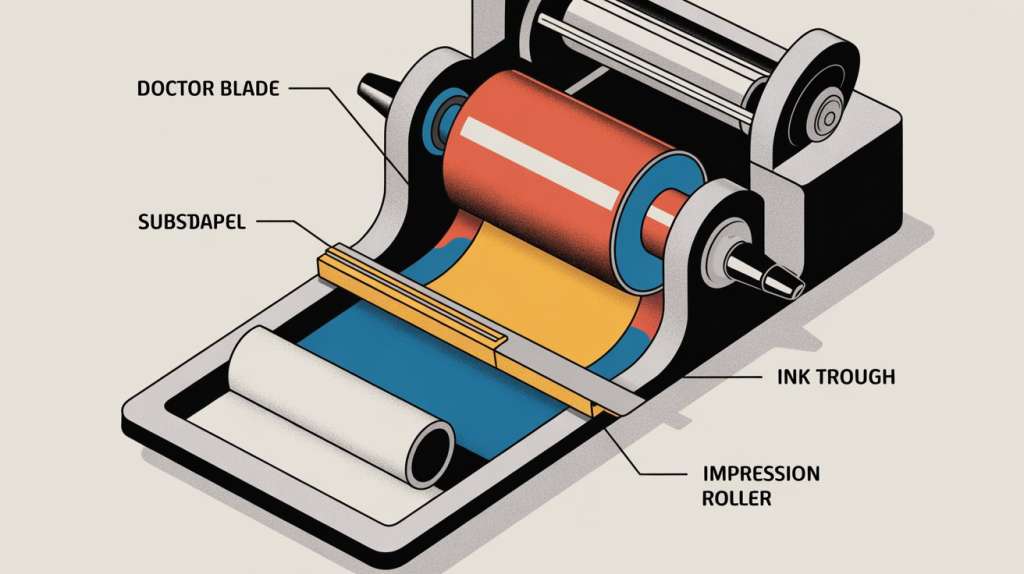
The cylinder spins through ink, gets coated, then this blade scrapes off the excess. Only ink in those pits stays. When you press your material against the cylinder, the ink jumps over through capillary action.
End result? Sharp images and colors that look identical across however many millions of prints you’re doing. That’s the whole appeal for packaging companies.
But What About The Cost OF cylinder?
Yeah, starting out it’s not cheap. Engraving cylinders, copper plating, setup – it adds up. If you’re only doing a few thousand prints, rotogravure makes zero sense financially.
But when you’re doing massive runs, the math changes completely. That upfront cost gets divided across so many prints that your per-unit price drops like crazy. Plus these cylinders last forever, so you’re not replacing them constantly.
Short version: pricey to start, crazy cheap per print once you get going. For companies doing millions of units, it’s actually one of the smartest investments.
What Actually Affects the Price?
Cylinder costs vary a lot depending on:
Size and how deep the engraving needs to go. Bigger and deeper = more expensive.
How thick that copper layer is. More copper costs more but also lasts longer.
Finish quality standards you need to hit.
Where it’s being made. You’ll find different pricing from manufacturers in Pakistan, India, Dubai, Europe – all depends on their tech and labor costs. Some still do manual chemical etching, others have fancy laser setups.
Bottom line: find a manufacturer you trust who can deliver consistent quality.
How Long Does a Cylinder Last?
Years, honestly. A well-made cylinder can pump out hundreds of thousands of square meters before needing replacement.
What keeps them alive:
Good materials make a difference. Better steel and copper = longer life under all that stress.
Chrome coating takes the beating so your copper stays good underneath. Without chrome you’d burn through cylinders fast.
Clean them regularly. Old ink buildup will destroy a cylinder if you let it sit.
Watch your pressure settings. Cranking it up doesn’t improve anything, just wears stuff out faster and can actually make your prints look worse.
Keeping Cylinders in Good Shape
You gotta clean these things. Grab some solvent or water-based cleaner and proper brushes to scrub off dried ink. Don’t skip this.
Eventually you might need to re-plate or re-engrave sections, but that beats buying a brand new cylinder. Take care of it right and one cylinder handles multiple campaigns over years. That’s why it’s worth the initial investment.
Why People Choose Rotogravure
The image quality is unreal. You get continuous tone effects that other methods can’t touch.
Speed matters when you’re doing millions of prints. This process flies.
Everything looks the same. First print, millionth print – identical colors and texture.
Those cylinders keep going and going. Use them over and over.
Works on basically anything – paper, foil, film, laminates, whatever.
That combo of quality, speed, and reliability is hard to beat in the packaging world.
Where You’ll See It Used
Flexible packaging – All your snack bags, food wrappers, pharmaceutical packaging. Anywhere you need that print to look perfect and stay consistent.
Decorative stuff – Wallpapers and laminates where appearance really matters.
Labels and stickers – Especially when colors need to pop.
Security printing – Money, certificates, documents where quality and detail are non-negotiable.
Premium publications – High-end magazines and catalogs that need to look sharp.
Each of these needs that high-resolution output and color accuracy that rotogravure delivers.
The Big 4 Printing Types
Gravure – What we’ve been discussing. Engraved cylinders transfer ink directly. Best for massive quantities where everything needs to match perfectly. Think packaging and magazines.
Flexographic – Uses flexible plates instead of cylinders. Good for medium runs, works on different materials, inks dry quick so production moves fast.
Offset – You see this everywhere – books, brochures, business cards. Ink transfers from plate to rubber blanket to paper. Really precise, especially for text.
Digital – The newer option. Easy setup, perfect for small batches or when each print needs customization (personalized stuff). Can’t compete with rotogravure on speed or consistency for industrial-scale work though.
Some Technical Stuff Worth Knowing
Cylinder dimensions – Bore size and diameter have to match your specific machine. Mess this up and your ink transfer gets wonky, alignment goes off, whole process falls apart.
Surface texture – How smooth the cylinder is actually matters a lot. There’s a measurement called Ra value that tells you the roughness level. Hit the right number and your colors stay consistent, no streaking, details come out clean.
Picking your ink – Solvent-based or water-based, depends what you’re printing on and what it’s for. Food packaging usually needs low-migration inks for safety reasons – you don’t want ink chemicals ending up in someone’s chips.
Questions People Always Ask
What even is a rotogravure cylinder?
Metal roller with tiny engraved cells that hold ink and transfer it onto whatever you’re printing.
How much does one cost?
Depends on size, engraving depth, materials. Not cheap upfront but pays off over time with big runs.
Is this printing method expensive?
Starting out, yeah. But when you’re doing mass production, your per-unit cost drops way down. Ends up being economical.
What’s a rotogravure print?
Anything printed using those engraved cylinders. Known for rich colours and consistent detail.
How long will a cylinder last me?
With decent maintenance and that chrome coating, you can run multiple production cycles before needing a replacement.
What kind of ink works with this?
Both solvent and water-based inks. Choice depends on what material you’re printing on and what the final product needs to do.
Can I use this to print 100 A4 pages?
I mean, technically yes, but why would you? This method’s built for bulk production, not small stuff like that.
What are the four main printer types?
Gravure, Flexographic, Offset, and Digital.
Is rotogravure better than digital?
For long runs, absolutely. Sharper results, more consistent, cheaper per unit. Digital wins for small batches though.
Any downsides to rotogravure?
Setup costs are high and prep takes longer compared to digital or flexo printing.
What’s the cheapest printing method?
Digital for small batches. Gravure for mass production once you spread that setup cost around.
What’s the deal with 3D printing problems?
Different ballgame entirely, but materials cost a lot and it’s slow for big items. Not really comparable to rotogravure though.
Wrapping This Up
Rotogravure cylinders are still the gold standard for precision printing. Those tiny engraved cells, the longevity, the way colors stay brilliant across millions of prints – it’s hard to match.
Yeah, setup isn’t cheap. But if you’re doing serious volume and care about quality, the investment makes sense. For companies wanting their packaging and branding to look consistently amazing, rotogravure keeps proving itself as the smart choice.